
June 02, 2026
Capped composite decking contains a protective polymer shell that is resistant to stains, fading, and dampness. It offers you excellent durability and long warranties. Uncapped composite decking does not have this outside cover. This means that it is cheaper and more natural appearing, but will be more prone to fading, scratching, and staining.
This guide is the definitive comparison. It covers every measurable difference between capped and uncapped composite decking with specific data, real-world performance implications, and clear buying recommendations.
Table of Contents
Wood fibers and recycled plastics are mixed with binding agents, UV stabilizers, and pigments. The mixture is heated and extruded through a die to form a solid board. The resulting product is uniform throughout, the same material from surface to core.
Surface texture is pressed into the board during the extrusion process. The wood fibers are visible at the surface, giving uncapped boards a more organic, natural appearance.
Capped boards start with the same core material. During a second extrusion step called co-extrusion, a thin polymer shell (typically HDPE or PVC, 0.5–1.0 mm thick) is fused around all four sides of the board. This shell is permanently bonded to the core. It cannot peel or delaminate under normal conditions.
The cap acts as a barrier against moisture, stains, UV radiation, and surface scratches. The wood-grain texture and color are molded into the cap itself, allowing for more precise and consistent aesthetics than uncapped boards.
Learn More: What are Capped Composite Decking Boards?
All prices reflect U.S. national averages as of 2025.
| Factor | Capped | Uncapped |
|---|---|---|
| Material cost per sq ft | $6–$12 | $4–$8 |
| Water absorption (24-hour soak) | <1% | 1–5% |
| Stain resistance | Excellent (liquid beads on surface) | Moderate (liquid can penetrate) |
| Scratch resistance | Very good (polymer shell is tough) | Moderate (core material is softer) |
| UV fade resistance | Excellent (10–15+ years minimal fade) | Fair (noticeable fading in 3–5 years) |
| Mold/algae resistance | Excellent (sealed surface) | Moderate (porous surface retains moisture) |
| Slip resistance (wet) | Good with textured cap | Good with textured surface |
| Expected lifespan | 25–30+ years | 15–20 years |
| Typical warranty | 25-year structural + fade/stain | 10–15 year limited |
| Cleaning frequency | Every 6 months | Every 3 months (more in humid areas) |
| Color options | Wide range (color molded into cap) | Moderate (limited by core pigmentation) |
| Appearance | Consistent, refined finish | More organic, visible wood fibers |
| Cut end treatment | Seal recommended (exposes uncapped core) | No treatment needed (uniform material) |
| Paintable? | No (cap prevents adhesion) | Yes (but not recommended) |
This is the most significant performance gap between capped and uncapped.
Uncapped boards absorb 1–5% moisture through their exposed surface. In consistently wet or humid environments, this absorbed moisture creates conditions for mold and algae growth on the surface. The mold does not damage the structural integrity of the board, but it makes the surface slippery and unsightly. It also requires more frequent cleaning.
Capped boards absorb less than 1% moisture. The polymer shell blocks water from reaching the wood-fiber core. This makes capped boards far more resistant to mold, algae, and moisture-related swelling. In high-humidity climates, coastal areas, and pool surrounds, this advantage is decisive.
Real-world implication: In dry climates like Arizona or Colorado, the moisture difference matters less. In wet climates like the Pacific Northwest, Southeast, or coastal regions, capped boards perform dramatically better over time.

Spilled liquids behave very differently on capped and uncapped surfaces.
On capped boards, liquids bead on the polymer surface. Wine, grease, sunscreen, and food spills can be wiped off easily, even hours later. The sealed surface prevents absorption.
On uncapped boards, liquids begin absorbing into the surface within minutes. If a spill is not cleaned quickly, it can cause a permanent discoloration. This is especially problematic with oil-based substances like sunscreen, cooking grease, and tree sap.
Real-world implication: If your deck is used for dining, grilling, or poolside lounging, capped boards save significant cleaning effort and prevent permanent staining.
Learn More: Can you put a grill on a composite deck?
All outdoor materials fade over time. The question is how much and how fast.
Capped boards incorporate UV stabilizers within the polymer shell. The cap absorbs and deflects UV radiation before it reaches the core pigments. Most capped products show minimal visible fading for 10–15 years. Initial color settling (a very slight shift) occurs in the first few months and then stabilizes.
Uncapped boards rely on UV stabilizers mixed into the core material. These stabilizers are less concentrated at the surface where UV exposure is highest. Noticeable fading typically begins within 3–5 years. Dark colors fade faster than light colors.
Real-world implication: If you choose a dark color like charcoal or walnut, capped boards hold that color dramatically longer. Light colors (gray, sand) show less visible fading in either type.

The polymer cap is harder than the exposed wood-fiber core of uncapped boards. Capped boards resist scratches from furniture legs, pet claws, dropped objects, and foot traffic better.
Uncapped boards scratch more easily. The scratches expose fresh core material that may differ slightly in color from the weathered surface, making marks more visible.
Real-world implication: Households with dogs, children, or heavy furniture movement benefit most from capped boards. Minor scratches on uncapped boards can sometimes be reduced with light sanding, though this option does not exist for capped products.
This is a practical installation detail that many buyers overlook.
When you cut a capped board, the cut end exposes the uncapped core. This exposed edge has the same moisture vulnerability as an uncapped board. On visible cut ends (stair treads, border boards, fascia edges), apply a manufacturer-recommended end sealant to protect the exposed core and match the cap color.
Uncapped boards have no cap to interrupt. The cut end is identical to the rest of the board. No special treatment is needed.
Real-world implication: If your design includes many visible cut ends (picture frame borders, angled cuts, stair treads), factor in the time and cost of end sealing for capped boards.
Learn More: How to Deal with The Scalloped End of Composite Decking?
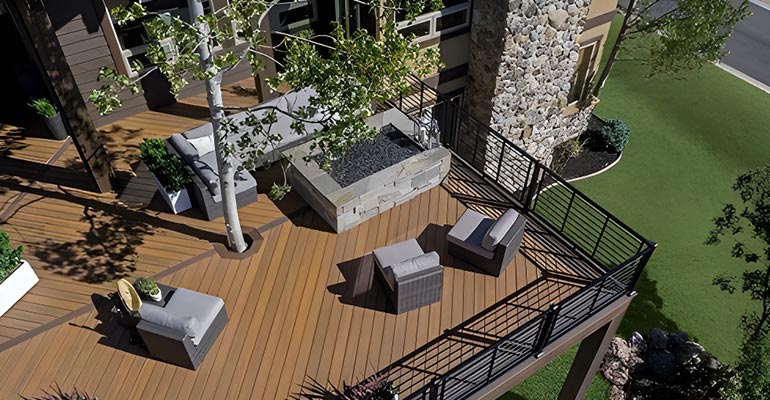
Capped boards cost 30–50% more per square foot than uncapped boards. For a 300 sq ft deck, the material cost difference is roughly $600–$1,200.
However, capped boards last 25–30 years compared to 15–20 years for uncapped. They also carry longer warranties (typically 25 years vs. 10–15 years) and require less frequent cleaning.
25-year total cost comparison (300 sq ft deck):
| Cost Component | Capped | Uncapped |
|---|---|---|
| Initial materials | $2,700 | $1,800 |
| Installation labor | $2,400 | $2,400 |
| Cleaning supplies (25 years) | $200 | $400 |
| Board replacement (if needed) | $0 | $1,800 (one replacement at year 15) |
| 25-year total | $5,300 | $6,400 |
Over 25 years, capped composite decking costs less than uncapped, despite the higher upfront price. The savings come from a longer lifespan and zero replacement costs.
Choose capped composite decking if you:
Choose uncapped composite decking if you:
For most residential deck projects in exposed outdoor conditions, capped composite decking is the better investment. The higher upfront cost is recovered through longer lifespan, lower maintenance, and better stain and fade protection.
COOWIN capped composite decking uses a co-extruded HDPE shell that fully seals the board core. It is available in multiple colors and wood-grain textures with a 25-year structural warranty. Request free samples to compare capped and uncapped options side by side.

Capped and uncapped composite decking share the same core material. The polymer shell is what separates them in performance, lifespan, and total value.
For exposed outdoor decks in most climates, capped is the clear winner. The extra cost upfront buys 10+ additional years of service life, dramatically better stain and fade resistance, and lower lifetime maintenance costs.
For covered, sheltered, or budget-limited projects in dry climates, uncapped remains a solid and cost-effective option.
Need help deciding? Contact COOWIN’s team for a project-specific recommendation, or order free samples of both types to compare in person.
For most homeowners, yes. Capped boards last 25–30 years compared to 15–20 for uncapped. They resist stains, fading, and mold significantly better. Over 25 years, capped boards typically cost less in total due to avoided replacement and reduced maintenance.
Yes. Capped boards have a smoother, more uniform surface with consistent color. Uncapped boards show visible wood fibers and a slightly more textured, organic appearance. The difference is most obvious at the board edges, where the thin cap layer is visible on capped products.
It is recommended that any cut ends that remain visible after installation. Cutting exposes the uncapped core, which is more vulnerable to moisture. Apply manufacturer-recommended end sealant to protect the exposed edge. Interior cuts hidden between boards do not need sealing.
It depends on the surface texture. Capped boards with deep wood-grain embossing or grooved profiles maintain good traction when wet. Smooth-surface capped boards can be slippery. For pool decks and stairs, always choose textured capped boards. COOWIN’s textured capped boards are designed for safe wet-area use.
High-quality uncapped composite decking lasts 15–20 years with regular maintenance. In dry climates with limited weather exposure, it can approach the lower end of capped board lifespan. In humid or wet climates, the gap widens significantly. Uncapped boards in high-moisture environments may need replacement after 12–15 years.

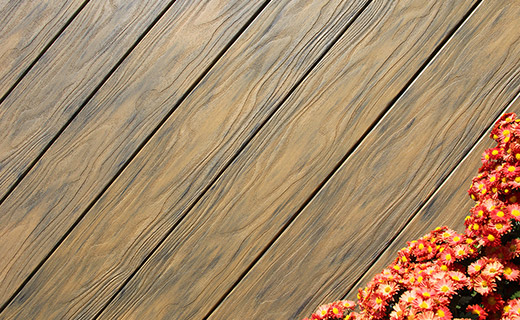
Can You Put Composite Decking Over Existing Wood Deck?
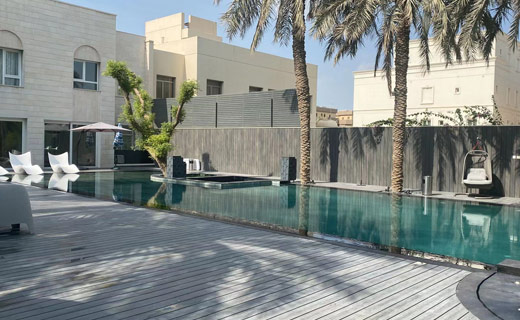
How Much Does a 20 x 20 Composite Decking Cost in 2026?
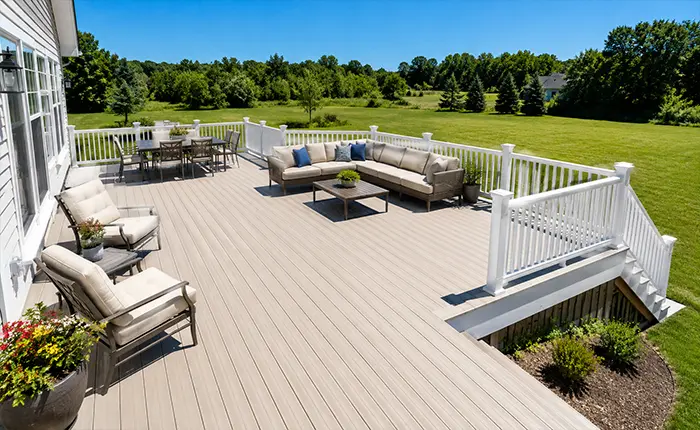
What Is The Best Decking Material For Full Sun?
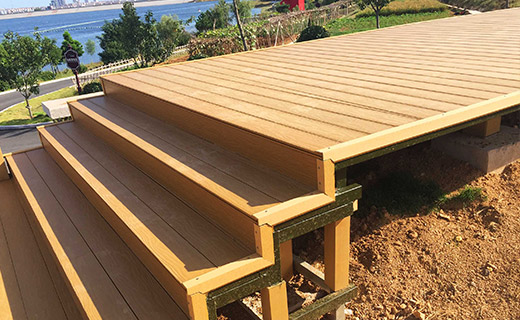
Why Does Composite Decking Warp and How to Fix It?
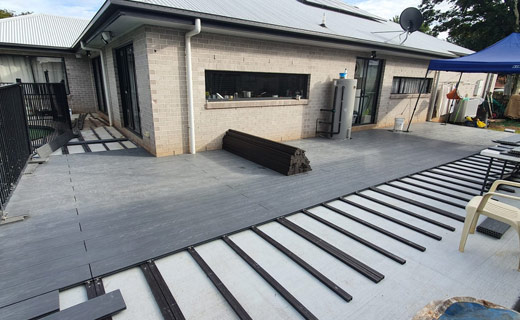
Can You Just Replace Deck Boards with Composite?
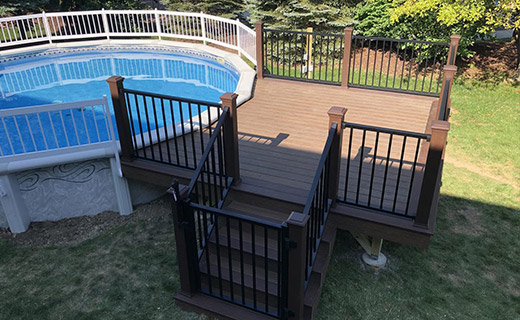
How to Building a Pool Deck Around an Above Ground Pool
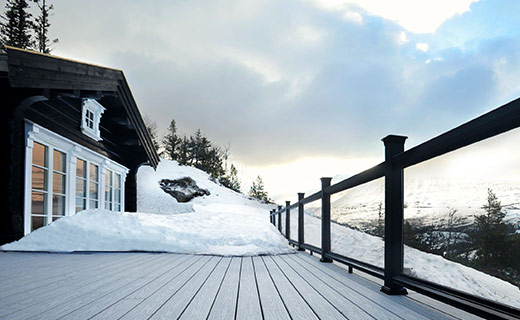 Will Composite Decking Become Slippery in Winter?
 Composite Fencing for Windy Areas: Wind Load and Design Tips
 How To Finish Off Composite Decking Edges?
 Can Fire Pits Be Used on Composite Decking?
