
September 09, 2026
Composite fencing can be a strong choice near the coast. Capped boards resist moisture, rot, insects, and weathering. A coastal fence also faces humidity, UV, wind pressure, and repeated wet and dry cycles, so the boards are only part of the job.
If you have ever watched gate hinges rust orange within a season near the surf, you already know salt goes after the hardware long before the boards. At COOWIN, we build the panels, and we will still say coastal durability depends on the whole system, not the boards alone.
Table of Contents
Coastal sites are hard on fencing because salt, moisture, UV, and wind attack different parts of the system at the same time.
Salt spray leaves chloride-rich deposits across the boards, hardware, and posts. Those deposits hold moisture against metal and speed up corrosion. Timber can swell, split, and decay after repeated wetting. Composite boards do not corrode like steel, but salt can still collect around joints and hardware.
High humidity keeps surfaces damp and slows drying after sea mist. UV then changes surface color and can degrade unprotected polymers. So a coastal fence needs UV resistance and structural design too.
Salt exposure climbs the closer a property sits to surf or open saltwater. Industry marine guidance flags higher corrosion risk within roughly 3 miles of surf, and about half a mile of calmer marine water. Prevailing wind, shelter, and rainfall shift the real exposure from site to site.

Composite fencing keeps moisture maintenance low, but the best coastal material still depends on wind exposure, appearance, and budget.
Wood-plastic composite blends wood fiber with a polymer matrix, and a capped board adds a polymer-rich shell around the core. Research on coextruded WPC found the cap cut moisture uptake by roughly 77 to 90 percent versus an uncapped core in one study.
The cut ends stay the weak point. An open end can take on water several times faster than the capped face, so coastal installs should seal or cap exposed ends. See why capped and uncapped composite fencing behave so differently.
Saltwater does not corrode a capped composite board the way chlorides attack bare steel. The vulnerable parts are the metal and the joints. Watch the screws, brackets, hinges, and gate hardware. Cut edges and salt traps matter too, so inspect the whole system rather than the boards alone.
| Material | Salt resistance | Maintenance | Main coastal weakness |
| Capped composite | High at the board face | Low | Hardware and wind design |
| Timber | Moderate | High | Rot, splitting, movement |
| Aluminum | High when coated well | Low | Coating damage, galvanic corrosion |
| PVC | High | Low | UV aging, structural rigidity |
Composite suits owners who want a timber look without repeated coating. Aluminum also holds up well when its coating and fasteners match the exposure.

Capped or coextruded boards with documented UV performance and coastal grade hardware are the better bet for exposed sites.
A coextruded board gets its outer shell during manufacturing. US Forest Service research found that stabilized cap layers improved WPC moisture and weathering resistance over uncapped controls. A cap is not absolute protection, though. Edges, cuts, and poor detailing can still let moisture in.
UV resistance matters because many coastal fences take strong sun for long hours. Weak UV stability shows up as color change even when the fence stays sound. Look for documented weathering data and clear warranty terms, not a vague “fade resistant” label. Our guide on whether composite fences fade explains what to expect.
Grade 316 stainless steel is the common coastal pick because its molybdenum content resists chloride pitting far better than grade 304. Marine guidance points to grade 316, or better, for hardware within a few miles of surf. Grade 316 is not seawater-proof either. Severe splash zones can call for duplex or higher alloy grades.
| Specification | Why it matters |
| Capped or coextruded surface | Reduces moisture exposure |
| UV weathering data | Shows color stability |
| Grade 316 fasteners | Cuts corrosion risk |
| Wind load information | Vital for exposed sites |
| Expansion requirements | Allows thermal movement |
| Coastal warranty terms | Confirms coverage near salt |

A coastal fence should be designed around the wind load of the whole system, not the strength of one board.
Solid privacy panels block airflow and give wind a large area to push on. That force runs into the rails, posts, connections, and footings, so panel thickness alone tells you little. If you have ever felt a solid fence shudder in an onshore gust, that load was heading straight for the posts.
Slatted panels let some air pass and cut the solid area exposed to wind. The gain depends on opening size, layout, height, and site. Slatted designs trade some privacy for more airflow, which can suit an exposed beachfront run.
Posts and footings carry wind force into the ground. Loose or sandy coastal soils often need different footings than firm inland ground. Fence height, post spacing, and wind region all factor in. In the US, wind loads follow ASCE 7 and local building codes, so match the design to the manufacturer’s engineering. Composite also expands and contracts with temperature, so follow the spacing and fixing in the system guide. Sound composite fence installation matters as much near the coast as the board choice does.
Coastal fence life depends on the board, salt exposure, UV, hardware, wind design, and upkeep together.
You know the feeling when a white salt film keeps returning on everything near the beach. A fence is no different, and a plain rinse is the fix. There is no universal interval, so beachfront exposure needs closer watching than a rain washed inland yard.
The hardware and gates need the most frequent checks, since metal corrodes long before a capped board fails. A well built capped fence with grade 316 hardware can last for many years near the coast. Salt, UV, and install quality all shape the real figure. Routine care keeps it going, so a regular clean plus a hardware check does most of the work. See how long composite fencing lasts for realistic service life, and our notes on maintaining composite fencing for a simple routine.

Composite fencing is a strong coastal choice when the whole system suits the exposure. Capped boards handle the salt air with low upkeep, while the hardware, wind design, and cut ends decide how long the fence really lasts. Choose a capped board with UV data, pair it with grade 316 fasteners, and design the posts and footings for your wind region.
For a coastal fence that keeps its look with little work, compare COOWIN composite fencing. Request a free sample to test it in your own sea air, or contact COOWIN’s team for help matching boards, hardware, and spans to your site.
Saltwater does not corrode a capped composite board the way it attacks bare steel, so the boards themselves hold up well. The real risk sits in the metal, at screws, brackets, hinges, and gate hardware. Cut ends can also take on moisture faster than the capped face. Seal the ends and use grade 316 fasteners to protect the system.
A composite fence usually needs far less upkeep than timber near the ocean. Capped boards resist the rot, splitting, and swelling that salt air drives into wood. Timber can work with regular sealing and repair, but it demands ongoing attention. Composite pulls ahead when you want a timber look without the recurring coating.
No single material wins on every coastal site, since wind, appearance, and budget all weigh in. Capped composite and correctly coated aluminum both perform well close to salt. Composite gives a timber look with low maintenance, while aluminum suits high wind and open designs.
Coastal fences should use grade 316 stainless fasteners within a few miles of surf, because grade 316 resists chloride pitting far better than grade 304. The extra molybdenum in grade 316 is the reason. It is still not seawater proof, so very aggressive splash zones can need duplex or higher grades.
Wash a coastal composite fence often enough to stop salt from building into a hard layer on the boards and hardware. There is no fixed interval, since a beachfront fence needs more frequent rinsing than one set back from the water. A plain water rinse handles most salt. Check the hardware for early corrosion at the same time.
A composite privacy fence can handle strong coastal winds when the posts, footings, and fixings are designed for the wind load. Solid panels catch more wind, so they push harder on the structure than slatted panels do. In the US, follow ASCE 7 and local codes plus the manufacturer’s engineering.

Can You Put Composite Decking Over Existing Wood Deck?
How Much Does a 20 x 20 Composite Decking Cost in 2026?
What Is The Best Decking Material For Full Sun?
Why Does Composite Decking Warp and How to Fix It?
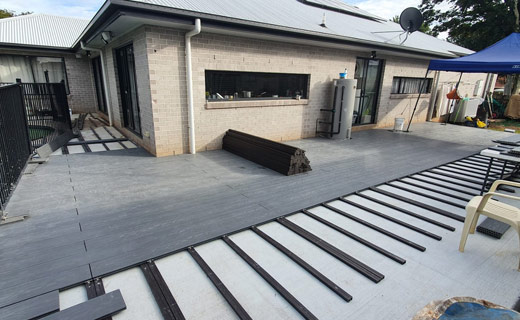
Can You Just Replace Deck Boards with Composite?
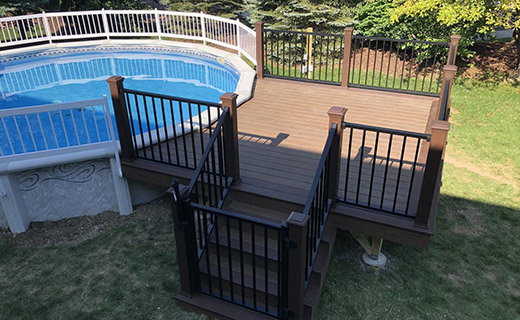
How to Building a Pool Deck Around an Above Ground Pool
 Composite Decking vs. Wood: Which Should You Choose?
 Composite Decking Colors: Selection Guide
 Can You Power Wash Composite Decking?
 Composite Decking Cost per Square Foot: A Project Budget Framework
